
Time: Oct 23 2026 Views: 18
A gearbox turns power into usable motion, so even a small fault can affect safety, output, fuel use, or production time. Whether you need automotive gear box repair, pump gearbox repair, boat gearbox repairs, or a gearbox rebuild industrial mixer teams can rely on, the best results start with careful diagnosis rather than guesswork. This guide explains how to spot problems early, decide whether repair makes sense, and understand the essential steps professionals use to fix gearbox issues properly.
Repair is often the right choice when the housing is sound, core components can be restored or replaced, and downtime matters more than waiting for a new OEM unit. Replacement may be better when damage is widespread, parts are unavailable, the unit has a poor service history, or the repaired gearbox would not meet long-term performance needs. The decision should balance cost, turnaround time, reliability, part availability, and the consequences of another failure.
A practical way to think about gearbox fixing is to separate the symptoms from the root cause. A noisy gearbox may only need bearings, seals, alignment correction, and fresh lubricant. But if the gears are heavily pitted, shafts are bent, or the housing has cracked under load, the repair scope changes quickly.
Use these criteria before committing to a repair:
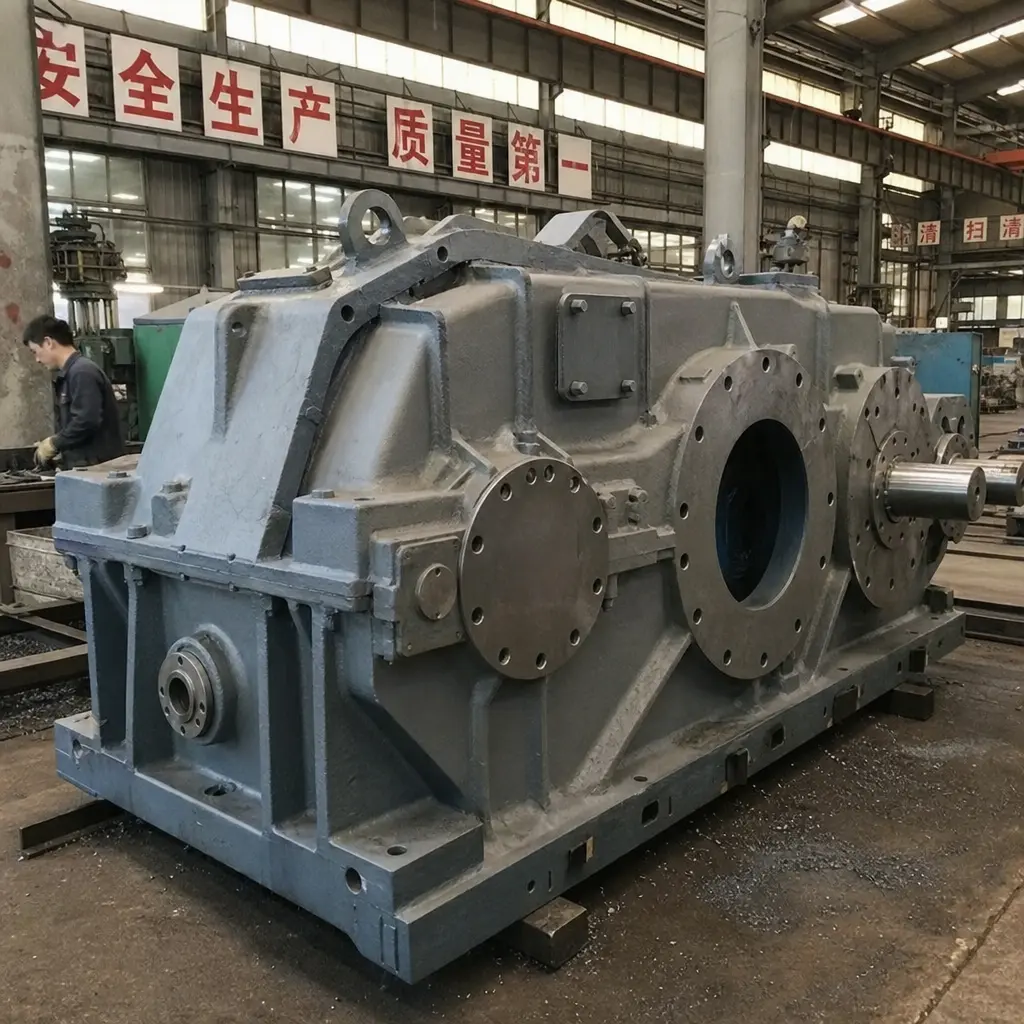
Gearboxes usually provide clues before they fail completely. The challenge is that many operators keep running the equipment until the noise, heat, or vibration becomes impossible to ignore. By then, a small seal leak or lubrication issue may have damaged bearings, gear teeth, shafts, and related machinery.
Common warning signs include unusual whining, grinding, knocking, or rumbling noises. Excessive heat is another concern, especially if the gearbox runs hotter than normal under the same load. Leaking oil, burnt-smelling lubricant, metal particles in the oil, or sudden vibration changes can also point to internal wear.
A quick inspection should cover:
If the gearbox is in a critical application, do not wait for total failure. A planned inspection is usually less disruptive than an emergency rebuild after production stops, a vessel is sidelined, or a vehicle becomes unsafe to drive.
Professional gearbox repair is not just a matter of replacing the loudest part. A proper process identifies why the failure happened, restores the unit to reliable condition, and verifies that it can return to service. Skipping steps may save time at first, but it can allow the same fault to return.
The repair process begins with symptoms, service history, and operating conditions. Technicians want to know when the problem started, whether the gearbox was overloaded, what lubricant was used, and whether the unit has been repaired before. This context helps distinguish normal wear from alignment problems, contamination, shock loading, or poor lubrication.
An initial visual and functional check may include oil inspection, shaft movement, backlash, vibration, heat marks, and external damage. If the gearbox can still be safely run, noise and vibration observations can provide valuable clues.
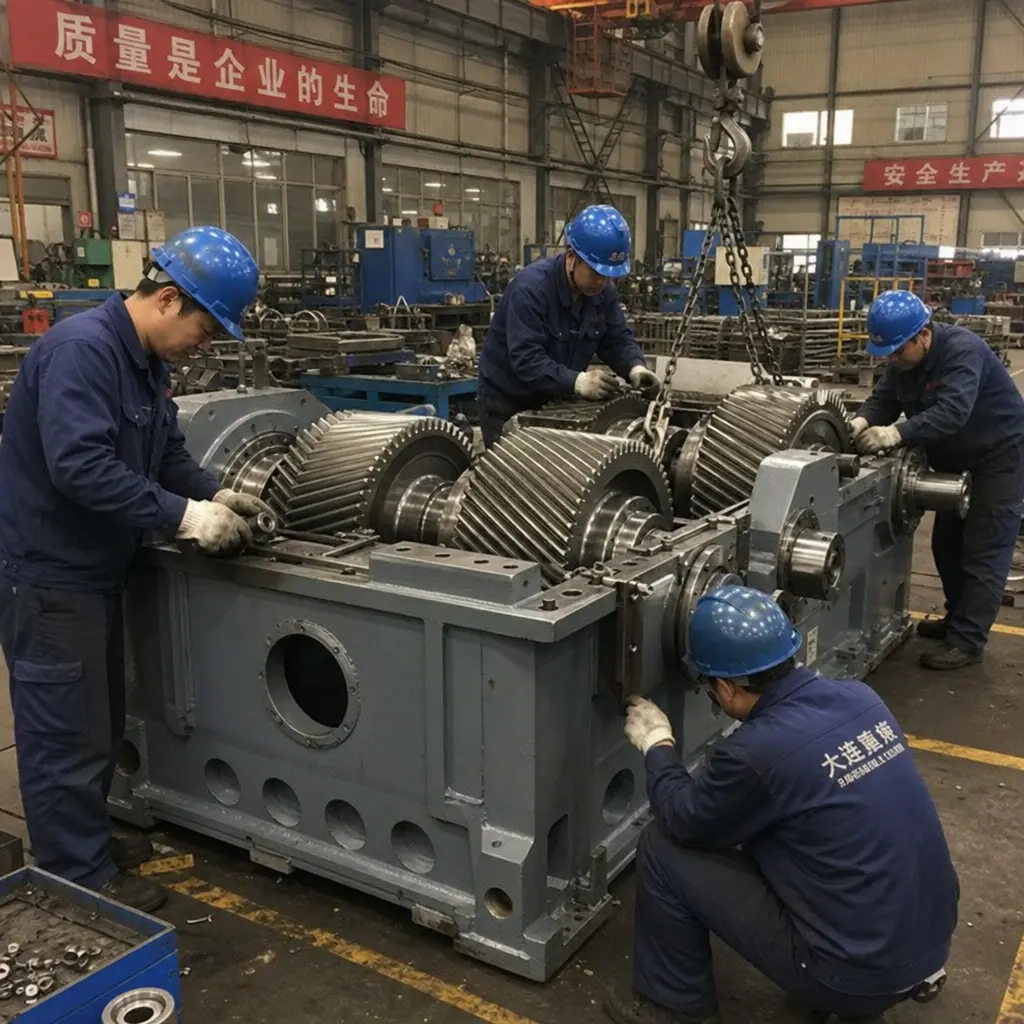
Once removed from service, the gearbox is carefully dismantled. Components are cleaned and inspected so the damage pattern becomes clear. Gears, pinions, shafts, bearings, seals, keys, housings, lubrication passages, and fasteners all matter.
This stage often reveals whether the repair is simple or more involved. Bearings and seals are commonly replaced during a rebuild because they are wear items and relatively inexpensive compared with the damage they can cause if reused in poor condition. Gears and shafts may be reused if they remain within acceptable condition, but any cracked, badly worn, or distorted part needs attention.
Failure analysis is what turns a parts swap into a lasting repair. If a bearing failed because lubricant was contaminated, replacing the bearing alone will not solve the problem. If gear teeth wore unevenly because shafts were misaligned, new gears may fail in the same way.
Common root causes include low lubricant, wrong lubricant, dirty lubricant, overload, fatigue, misalignment, corrosion, poor ventilation, shock loading, and environmental contamination. A good repair report should explain what failed, what likely caused it, and what should change before the gearbox goes back into service.
Depending on the inspection results, the repair may involve replacing bearings, seals, gears, pinions, shafts, or other damaged parts. For older or specialized units, custom gear manufacturing, shaft repair, presswork, metal treatment, or lubrication system improvements may be considered.
This is where repair can sometimes offer more than simply returning the gearbox to its previous state. If the original failure came from poor lubrication, heavy contamination, or repeated overload, a rebuild can include practical upgrades that make the unit better suited to its real working conditions.
Reassembly must be precise. Clearances, preload, backlash, contact patterns, sealing surfaces, and fastener torque all affect reliability. Even high-quality replacement parts can fail early if alignment is wrong or if the gearbox is installed under stress.
After reassembly, the gearbox should be filled with the correct lubricant and prepared for controlled testing. In industrial settings, alignment with motors, couplings, driven equipment, and mounting bases is just as important as the internal rebuild.
Before a repaired gearbox returns to full service, it should be tested for smooth operation, abnormal noise, leaks, vibration, heat, and oil flow where applicable. Testing may include no-load running, loaded checks, vibration monitoring, contact pattern confirmation, and final inspection.
Documentation is useful here. A clear record of replaced parts, measured conditions, and recommended maintenance gives operators a baseline for future inspections.
Different applications place different stresses on gearboxes, so the repair approach should match the equipment. A planetary gearbox repair may focus on load sharing, carrier condition, planet gears, bearings, and compact internal geometry. Boat gearbox repairs must account for moisture, corrosion, seals, thrust loads, and reliable operation in a harsh marine environment.
For pump gearbox repair, technicians often look closely at alignment, coupling condition, seal leakage, and continuous-duty wear. Pumps can transmit vibration or process-related stress into the gearbox, so the driven equipment should be inspected too. If the pump is binding, cavitating, or misaligned, the gearbox may suffer again after repair.
A gearbox rebuild industrial mixer operators depend on may involve additional concerns. Mixers often handle heavy starting loads, variable material resistance, and long operating cycles. That makes bearing condition, gear tooth contact, shaft integrity, mounting stability, and lubrication especially important. In some cases, the mixer process itself should be reviewed to reduce shock loads or repeated overload.
Automotive gear box repair has its own priorities, including shift quality, clutch or torque converter interaction, road safety, leaks, and drivability. The same core principles apply, but the diagnostic path must reflect the vehicle’s transmission type and use.
The easiest gearbox to fix is the one that never reaches catastrophic failure. Preventive maintenance does not need to be complicated, but it must be consistent. Small checks help catch lubrication issues, misalignment, wear, and contamination before they become expensive.
A practical maintenance routine includes:
For critical equipment, consider scheduled inspections rather than waiting for symptoms. Smart monitoring tools can also help track vibration, temperature, and operating trends, especially where downtime is costly.
Before you try to fix gearbox issues, make the equipment safe, document the symptoms, and avoid running it under load if the fault could worsen. Basic checks such as lubricant level, visible leaks, loose mounts, and coupling alignment can be useful, but internal repair should be handled carefully because gearboxes rely on precise tolerances.
Start by noting when the issue occurs. Does the noise appear at startup, under load, at a certain speed, or after the gearbox warms up? Check for oil leaks, smell the lubricant for signs of overheating, and look for metal particles if oil is drained. Photograph external damage, labels, mounting positions, and coupling setup before disassembly.
Avoid these common mistakes:
If the gearbox is large, safety-critical, marine-based, or tied to production equipment, professional support is usually the safer route. The right repair partner can inspect the whole failure chain rather than focusing only on the damaged component.
Gearbox fixing works best when it follows a disciplined process: diagnose the symptoms, inspect every critical component, identify the root cause, replace or restore worn parts, reassemble accurately, and test before returning to service. Repair can reduce downtime and cost when the gearbox is a good candidate, but replacement may be wiser when damage is severe or long-term reliability cannot be achieved.
Whether the job involves planetary gearbox repair, pump gearbox repair, boat gearbox repairs, automotive gear box repair, or a gearbox rebuild industrial mixer operations depend on, the principle is the same: do not treat the symptom and ignore the cause. A well-maintained, correctly aligned, properly lubricated gearbox will usually reward you with longer service life and fewer disruptive failures.
@ 2025-2026 Langteng Machinery