
Time: Oct 24 2026 Views: 21
Industrial equipment rarely fails because one part is “almost right.” It usually fails when torque, speed, space, duty cycle, heat, alignment, or environmental demands are not matched closely enough to the job. A custom gearbox is designed around those realities, giving manufacturers, machine builders, and plant operators a drivetrain solution that fits the application instead of forcing the application to fit a standard catalog unit.
Custom gearboxes can improve performance, reliability, packaging, and long-term serviceability in demanding industrial systems. They are especially valuable when standard reducers create compromises in footprint, output speed, mounting position, load capacity, noise, lubrication, or integration with surrounding equipment.
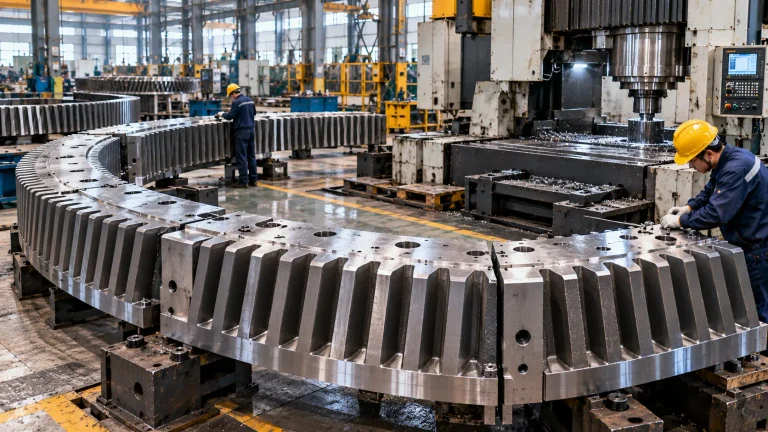
A custom gearbox is engineered for a specific machine, process, or operating environment rather than selected only from off-the-shelf ratios and housings. That means the gear geometry, ratio, shaft arrangement, bearings, seals, materials, lubrication method, housing shape, and mounting features can be tailored to the exact requirements of the equipment.
A standard gearbox can be the right choice for simple applications with common loads and generous space. But many industrial systems are not simple. They may need to deliver high torque in a compact envelope, run continuously, resist washdown, handle shock loads, reduce backlash, fit an existing machine frame, or align with legacy shafts. In those situations,
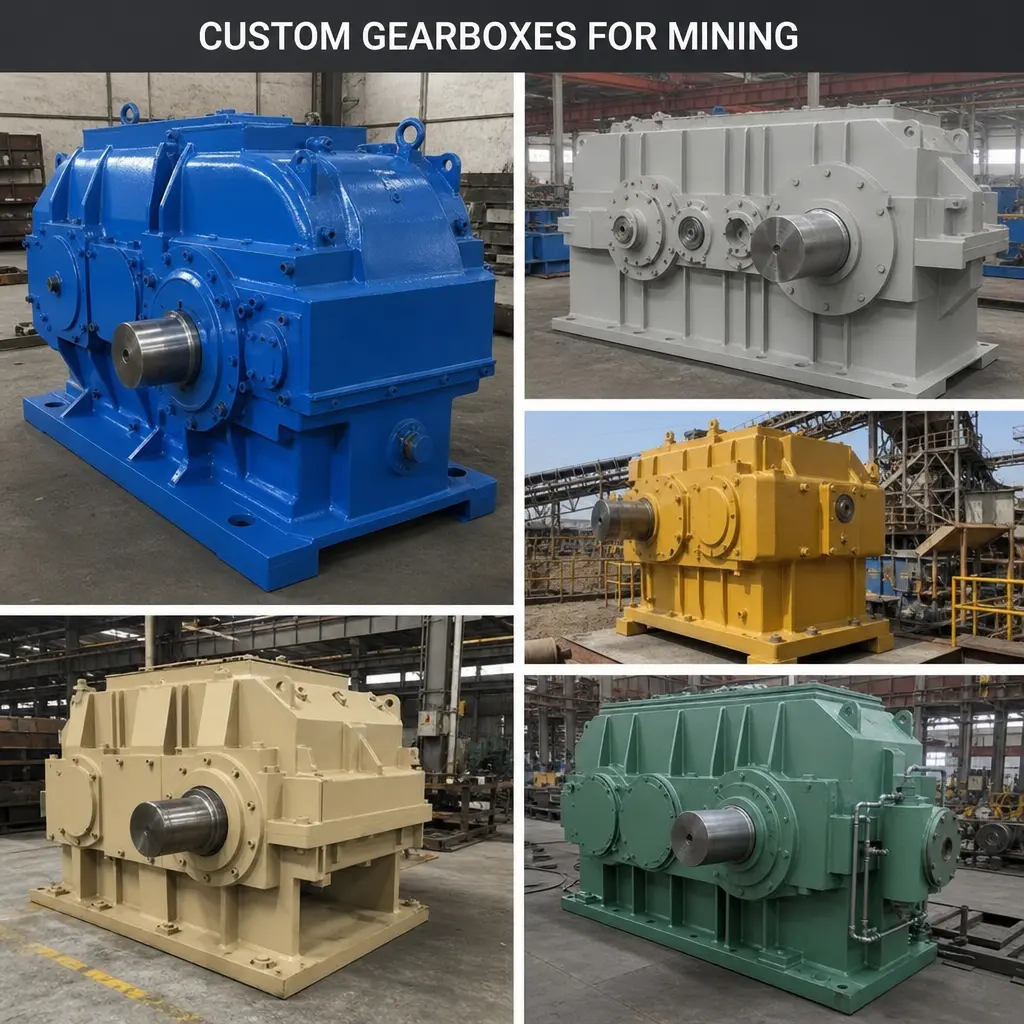
custom gearboxes allow engineers to remove unnecessary compromises early in the design process.
The result is not customization for its own sake. The value comes from matching the gearbox to the work it must perform every hour, shift, and production cycle.
Industrial gearboxes translate power into useful motion. When the gearbox is designed around the application, that motion can become more controlled, efficient, and predictable. A custom gearbox manufacturer can consider how the equipment starts, stops, accelerates, reverses, and responds to peak loads, then build a drivetrain that supports those movements more effectively.
This matters in applications such as conveyors, mixers, packaging lines, robotics, material handling systems, mining equipment, and specialty manufacturing machinery. A mismatch in ratio or torque capacity may cause sluggish operation, premature wear, vibration, overheating, or reduced throughput. A purpose-built solution helps the machine operate closer to its intended performance window.
Common performance advantages include:
For many industrial users, the biggest advantage is confidence. When the drivetrain is designed for the process, operators spend less time working around limitations and more time running production.
Modern industrial equipment often demands more power in less space. Machine builders may need to fit a gearbox into a narrow frame, reduce overhang, avoid interference with guards, or align with other components that cannot be moved. Standard gearboxes are limited by fixed housing dimensions and shaft layouts, which can force awkward compromises.
Custom gearboxes give designers more freedom. A housing can be shaped around the machine. Input and output shafts can be positioned to simplify layout. Mounting feet, flanges, or brackets can be integrated into the design. In some cases, a custom planetary gearbox may be selected because planetary gear trains can provide high torque density in a compact package.
This flexibility can also reduce the need for extra couplings, adapter plates, support structures, or secondary components. Fewer add-ons can mean cleaner assembly, easier guarding, better alignment, and fewer potential failure points.
For OEMs, this can make equipment more compact and marketable. For plants retrofitting existing machinery, it can help replace an obsolete or underperforming gearbox without redesigning the entire system.
Custom gearboxes often last longer because they can be engineered around the actual operating loads, environment, lubrication needs, and maintenance realities of the application. Instead of relying on a generic safety margin, gearbox builders can design critical components for the specific stress patterns the unit will face.
Longevity depends on many factors, including installation, alignment, lubrication, operating discipline, and maintenance. Still, the design stage has a major influence. When gears, shafts, bearings, seals, and housings are chosen for the true duty cycle, the gearbox is less likely to suffer from avoidable overload, contamination, heat buildup, or premature component fatigue.
Several design choices can support longer service life:
A standard unit may work well in a controlled environment but struggle in harsh service. Custom gearbox suppliers can account for those harsh conditions from the beginning, which can reduce downtime and improve lifecycle value.
In industry, gearbox reliability is not just a maintenance issue. It affects production schedules, labor planning, energy use, spare parts inventory, and customer commitments. When a gearbox fails unexpectedly, the cost is rarely limited to the replacement part. Lost production, emergency repairs, damaged connected equipment, and missed delivery windows can quickly become more expensive than the drivetrain itself.
Custom gearboxes help address reliability by reducing the gap between design assumptions and real-world operating conditions. If a mixer sees heavy startup loads, the gearbox can be built for that. If a conveyor runs in a dusty facility, sealing and lubrication can be designed accordingly. If a machine must operate in multiple orientations, oil flow and bearing support can be reviewed before the gearbox goes into service.
This is where experienced custom gearbox manufacturers add value beyond fabrication. They ask application questions that reveal hidden risks: How often does the equipment start under load? Is there frequent reversing? Are there washdown cycles? What is the ambient temperature? Is maintenance access limited? Each answer helps shape a gearbox that is more likely to perform reliably in the field.
A custom planetary gearbox is often considered when an application needs high torque output, compact dimensions, and strong load distribution. Planetary designs use multiple planet gears around a central sun gear, allowing the load to be shared across several contact points. This structure can support a compact design while maintaining strong torque capacity.
Planetary gearboxes are common in applications where space, precision, and power density matter. They may be used in automation, mobile machinery, robotics, packaging equipment, positioning systems, and heavy-duty industrial drives. A custom design can refine the ratio, housing, output interface, lubrication, and mounting configuration to suit the machine.
The main advantage is not only compactness. A properly designed planetary gearbox can also support balanced load sharing, coaxial input and output arrangements, and smooth operation. For equipment designers, that can simplify the overall drivetrain layout and help deliver more capability within a smaller footprint.
A gearbox does not work alone. It must connect to motors, couplings, shafts, frames, guards, sensors, lubrication points, and maintenance access areas. When the gearbox is selected late in the design process, engineers may have to make the machine accommodate the reducer. A custom gearbox reverses that relationship.
By designing the gearbox around the machine, teams can improve fit and function from the start. This can include matching the motor interface, aligning shaft heights, incorporating special mounting patterns, adding inspection ports, or designing housings that clear nearby equipment. The benefits show up during assembly, commissioning, and long-term service.
A well-integrated gearbox can help with:
For OEMs, integration can also improve repeatability. Once the custom gearbox is validated, it can become part of a standardized machine platform rather than a recurring engineering challenge.
Choosing among custom gearbox suppliers is not only about who can produce a component. It is about finding a technical partner that can understand the application, communicate clearly, and support the project from concept through operation. The best fit depends on the complexity of the gearbox, production volume, lead time, documentation needs, and service expectations.
Before engaging gearbox builders, it helps to prepare basic application information. Even if every detail is not final, the following inputs can make early conversations more productive:
A capable custom gearbox manufacturer will use these details to guide design tradeoffs. For example, a more compact housing may require careful thermal review. A low-maintenance design may influence seal and lubricant choices. Higher precision may affect gear quality, bearing selection, and assembly controls.
A custom gearbox may require more upfront engineering than a catalog product, but the decision should be evaluated across the full life of the equipment. If the custom unit reduces downtime, removes extra components, improves output, simplifies installation, or extends service intervals, it may provide stronger overall value.
This is especially true for machines where failure is costly or access is difficult. A gearbox buried inside a production line, mounted high on a structure, or operating in a remote site can be expensive to service. Designing for reliability and maintainability from the beginning can reduce future disruption.
Customization can also support inventory strategy. Instead of stocking several modified parts and adapters, a company may be able to standardize around a gearbox designed for its equipment. That can make documentation, training, and replacement planning more straightforward.
Before moving into design, teams should clarify what problem the gearbox must solve. The more specific the requirements, the easier it is to avoid overengineering in one area while missing a critical need in another.
Use this checklist as a starting point:
This preparation helps the design conversation stay practical. It also allows suppliers to recommend the right balance of performance, manufacturability, and serviceability.
Custom gearboxes give industrial teams a way to solve drivetrain problems with precision instead of compromise. They can improve torque delivery, packaging, reliability, service life, and machine integration when standard units do not fully match the application.
Whether the project calls for a compact custom planetary gearbox, a rugged heavy-duty reducer, or a specialized replacement for existing equipment, the best results come from clear requirements and close collaboration with experienced gearbox builders. When the gearbox is designed around the work it must do, the entire machine has a stronger foundation for dependable performance.
@ 2025-2026 Langteng Machinery